Thursday, November 7, 2013

Getting Things Done book notes/review

Getting Things Done: The Art of Stress-Free ProductivityGetting Things Done: The Art of Stress-Free Productivity by David Allen
My rating: 4 of 5 stars

Some things make sense, others seem a bit over the top.
My favorite quote was: "bright people have the capability of freaking out faster and more dramatically than anyone else." Joe and I laughed pretty hard over that one.. the subtitle of that chapter was: "Why bright people procrastinate the most"

View all my reviews

Teaching Naked Book Notes/Review

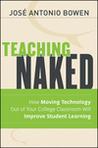
Teaching Naked: How Moving Technology Out of Your College Classroom Will Improve Student LearningTeaching Naked: How Moving Technology Out of Your College Classroom Will Improve Student Learning by Jose A. Bowen
My rating: 3 of 5 stars

Easy to read.. some ideas make sense and others are just some more education-ese. I do agree that what will make the in-person classroom unique (as opposed to online) is the human interaction, so that will be the most important thing for the professor AND students to bring to class.

View all my reviews

Thursday, October 16, 2008

Keeping track of books I've consulted

How do you keep track of all the books and ideas you have read about or consulted? I was thinking about posting to this blog about a book I just read, then realized it might fit better on my wiki. or, i could organize all my notes in zotero, but right now that account is limited to just my work computer. Maybe google docs would be a good place, but what if I delete that account and forget to move it? Easybib.com seems like another good place to start.

For today:

Burkhardt, Joanna M., Mary C. MacDonald, and Andre J. Rathemacher. Teaching Information Literacy : 35 Practical, Standards-Based Exercises for College Students. New York: American Library Association, 2003.
The best part of this book is that the exercises are tied to the ACRL information literacy standards. It is a typical book for teaching a research class, if you had a whole semester.
Contents of interest to me: Covers what information is, as a starting point (something that profs here have mentioned... that students have no idea how information goes from an idea to the tv to journals to books)
formulating a research hypothesis
concept mapping
keyword searching/finding synonyms

Friday, June 13, 2008

Session V. "Get the Ideas Flowing:"

Get the Ideas Flowing: Practical Advice for Planning and Hosting Professional Development Programs at your Library
Jennifer Little and Bob Cushman, Brockport (Bob joined us "live" from Brockport... great technology in the room we presented in.)
Dawn Eckenrode and Michelle Dubaj, Fredonia

Librarians from Fredonia and Brockport shared about the planning process for one-day workshops/conferences held at their respective campuses. Fredonia hosted a one-day seminar on library instruction and Brockport hosted a conference on integrating library services into learning management systems. Both programs had more attendees than were expected and were quite successful. Both groups expressed interest in repeating these workshops but with the help or leadership of other campus librarians as well.

For more information about Brockport's part, see my wiki at: http://collaboratory.wetpaint.com
See also the blog that the Brockport organizers started:
The One-A-Day Conference Planner
Brockport's conference website, Library-2-LMS

Thursday, June 12, 2008

Session N: Session II: Information Literacy Assessment: Assessing Teaching & Learning

Part II of series on information literacy assessment.

Rudy Leon -- Potsdam
Rudy introduced the topic and listed some of the challenges associated with assessing library instruction, especially the one-shot sessions that we all teach so much. She would like to build a one minute assessment instrument to be used after an instruction session by both professors and students.

Susan Kraat – New Paltz
Susan described both peer assessment (within just the librarians), collaborating with the English department to assess info lit skills, and faculty and student evaluation of teaching.

1. Peer assessment:
4 step process – (librarians paired with each other)

1.pre

2. during, after by observee,

3. follow-up with both,

4. repeat for minimum of 2 classes.

Positive feedback is reassuring

2. Info lit is part of ENL1 and 2

Used works cited page of papers to evaluate students' use of resources.

Use a rubric for ENL composition II

3. http://lib.newpaltz.edu/assistance/faculty/facfdbk.html

4. http://lib.newpaltz.edu/assistance/321_eval.html

Sends to all faculty, allows librarians to send it out if they want to.

Kim Davies-Hoffmann, Geneseo
Kim described assessment of students in specific classes and her partnership with an anthropology professor. Several librarians at Geneseo are using an instrument developed by her to assess students' knowledge of databases before they come for a library instruction session. They hope to expand their use.

Tips for assessment:

1. partner with faculty and students
2. Set goals and realize limitations
3. Teach with assessment in mind
Work with factuly to develop course schedule & assessment
Gauge the level of incoming students
Practice makes perfect

4. Assess
5. Results inform further teaching


Do a pre-test for specific disciplines… helps show professors that their students really DON”T know the resources like they think they do.
Powerpoint presentation: http://sunyla08.pbwiki.com/Information+Literacy+Assessment
http://anth229.pbwiki.com

http://anth224.pbwiki.com

Jennifer Little, Brockport
Jen spoke about assessment of librarians' teaching by professors who brought their classes for library instruction. For more information see her wiki at: http://collaboratory.wetpaint.com

Vision for the Future: Open and Accessible ENY/ACRL Annual Conference

   https://answergarden.ch/  https://jamboard.google.com/  https://etherpad.org/  https://pad.riseup.net/ https://www.mentimeter.com/ https:...