Wednesday, January 2, 2019

"White fragility: Why it's so hard for white people to talk about Racism"

I read this book by Robin Diangelo for the faculty book club in the fall of 2018.

Definition: -intended to describe a very specific white phenomenon. White fragility is much more than mere defensiveness or whining.  It may be conceptualized as the sociology of dominance" : an outcome of white people's socialization into white supremacy and a means to protect, maintain, and reproduce white supremacy.  The term is not applicable  to other groups who may register complaints or otherwise be deemed difficult (e.g., "student fragility.") p. 113

Racism will continue to exist, probably for the rest of my lifetime.  Although I can never completely overcome my biases, I can see myself on a continuum, where I am constantly growing and changing.  

Diangelo lists these assumptions, as a better way of making a difference in our environment, interactions, and norms:


  • Being good or bad is not relevant.
  • Racism is a multilayered system embedded in our culture.
  • All of us are socialized into the system of racism.
  • Racism cannot be avoided.
  • Whites have blind spots on racism, and I have blind spots on racism.
  • Racism is complex, and I don't have to understand every nuance of the feedback to validate that feedback.
  • Whites are / I am unconsciously invested in racism.
  • Bias is implicit and unconscious; I don't expect to be aware of mine without a lot of ongoing effort.
  • Giving us white people feedback on our racism is risky for people of color, so we can consider the feedback a sign of trust.
  • Feedback on white racism is difficult to give; how I am given the feedback is not as relevant as the feedback itself.
  • Authentic antiracism is rarely comfortable.  Discomfort is key to my growth and thus desirable.
  • White comfort maintains the racial status quo, so discomfort is necessary and important.
  • I must not confuse comfort with safety; as a white person, I am safe in discussions of racism.
  • The antidote to guilt is action.
  • It takes courage to break with white solidarity; how can I support those who do?
  • I bring my group's history with me; history matters.
  • Given my socialization, it is much more likely that I am the one who doesn't understand the issue.
  • Nothing exempts me from the forces of racism.
  • My analysis must be intersectional (a recognition that my other social identities-- class, gender, ability--inform how I was socialized into the racial system). 
  • Racism hurts (even kills ) people of colo 24-7. Interrupting it is more important than my feelings, ego, or self-image.  
I have bolded the ones that struck me the most and/or that I would like to work on. 

Find the book here on Amazon

Friday, December 7, 2018

Websites from NYLA 2018


Teacher Lab from Brooklyn Public Library (it has CTLE credits which are very helpful for teacher and teacher-librarians). 
Educator Lab from SENYLRC
This is more a series of workshops for teachers and librarians.  I was interested due to my K-16 involvement, plus information literacy in general.

Project Enable  (Expanding Non-discriminatory Access By Librarians Everywhere)
I’m really excited about this one, and I hope to work through it at some point.

RASS Mini-Grant Program
http://tinyurl.com/RASSMiniGrant

  • Will offer 1 or 2 times per year
  • Deadline is 1/19/19
  • Each Application may request between $50 and $200
  • Money for an innovative program engaging adults
  • Will be notified in late Feb. 2019
  • Must mail photo and flyer from the event by Aug.31, 2019
  • email contact: RASSMiniGrant@gmail.com

Cultural Competence
"cultural humility is a two-way street"
Read Nichole Cook's book: Information Services to diverse populations

ODLOS -- free webinar on cultural intelligence


Monday, December 16, 2013

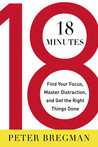
18 Minutes: Find Your Focus, Master Distraction, and Get the Right Things Done

18 Minutes: Find Your Focus, Master Distraction, and Get the Right Things Done18 Minutes: Find Your Focus, Master Distraction, and Get the Right Things Done by Peter Bregman
My rating: 5 of 5 stars

18 Minutes: Find your focus, master distraction, and get the right things done
By Peter Bregman

p. 36--Event-->outcome-->reaction

When an unsettling event occurs, pause before reacting. In that pause, ask yourself a single question: What is the outcome I want? Then, instead of reacting to the event, react to the outcome. In other words, stop reacting to the past and start reacting to the future.

Here’s the hard part: You react to the event because it’s asking you to react to it. But just because the event catalyzed your action doesn’t mean it should determine it. How you react can and should be determined by outcome—by the future you want to create.

“Knowing the outcome you want will enable you to focus on what matters and escape the whirlwind of activity that too often leads to nowhere fast.

p. 45: 4 behaviors to shape your next year:
1. Leverage your strengths.
2. Embrace your weaknesses.
3. Assert your differences.
4. Pursue your passions.

p. 89 – Avoiding paralysis
Answer 3 questions:
1. Am I working on something meaningful and challenging—something for which I have about a 50% chance of succeeding?
2. Am I relating to other people at work or socially—people I like and to whom I feel close?
3. Do I feel recognized for the work I am doing—paid or unpaid? Can I influence decisions and outcomes?

p. 94 – Don’t be paralyzed by an uncertain future. Just keep moving.

p. 100- Create an annual focus
Focus your year on five things: Three work-related, two personal. These are not goals, they are your focus. 95% of your time go to these, 5% to miscellaneous.
Focus on the five areas that will make the most difference in your life.

p. 118 – When I create my to-do list, put them in the categories of the 5 goals I created for my annual focus. 6th category is for the miscellaneous.
“Reduce your overwhelm by putting your tasks in an organized list, focused on what you want to achieve for the year.”

p. 131 – Nothing should stay on your list, haunting you for more than 3 days.

p. 137 – Reflecting/Interrupting once an hour: When the chime or ding goes off, have I been the person I really want to be in the last hour? We need to remind ourselves of who we know we really are. And then we need to act that way. Constantly, predictably, minute by minute and hour by hour.
p. 142 – Reflecting on my day:
1. How did the day go? What success did I experience? What challenges did I endure?
2. What did I learn today? About myself? About others? What do I plan to do—differently or the same—tomorrow?
3. Whom did I interact with? Anyone I need to update? Thanks? Ask a question of? Share feedback with?

18 MINUTE DAY
1. Step 1: 5 minutes: Your morning minutes. BEFORE turning on your pc, look at your to-do list. Take those things off your to-do list and put in calendar, in a specific time. Check the 3 day rule and move that stuff to calendar or off the list.
2. Step 2: (1 minute every hour): Refocus. Set a reminder to refocus, check your hour by hour goals every hour. What did you do.. manage every hour!
3. Step 3: (5 minutes): Your evening minutes. At end of day (at work) turn of your pc and answer the 3 questions above.

p. 188 – Time suck of collaboration
When someone comes to you with a request:
1. Am I the right person?
2. Is this the right time?
3. Do I have enough information?
Resist the temptation to say yes too often.

p. 203 – A few moments of transition time can help make your next task shorter, faster, and more productive for you and others.

p. 230 The world doesn’t reward perfection; it rewards productivity.
p. 236 Don’t settle for imperfection. Shoot for it.


View all my reviews

Thursday, November 7, 2013

Getting Things Done book notes/review

Getting Things Done: The Art of Stress-Free ProductivityGetting Things Done: The Art of Stress-Free Productivity by David Allen
My rating: 4 of 5 stars

Some things make sense, others seem a bit over the top.
My favorite quote was: "bright people have the capability of freaking out faster and more dramatically than anyone else." Joe and I laughed pretty hard over that one.. the subtitle of that chapter was: "Why bright people procrastinate the most"

View all my reviews

Teaching Naked Book Notes/Review

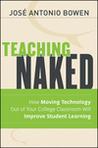
Teaching Naked: How Moving Technology Out of Your College Classroom Will Improve Student LearningTeaching Naked: How Moving Technology Out of Your College Classroom Will Improve Student Learning by Jose A. Bowen
My rating: 3 of 5 stars

Easy to read.. some ideas make sense and others are just some more education-ese. I do agree that what will make the in-person classroom unique (as opposed to online) is the human interaction, so that will be the most important thing for the professor AND students to bring to class.

View all my reviews

Vision for the Future: Open and Accessible ENY/ACRL Annual Conference

   https://answergarden.ch/  https://jamboard.google.com/  https://etherpad.org/  https://pad.riseup.net/ https://www.mentimeter.com/ https:...